Thursday, May 31, 2012

Capstone Project: Marble Sorter

Initial Ideas/Prototypes:


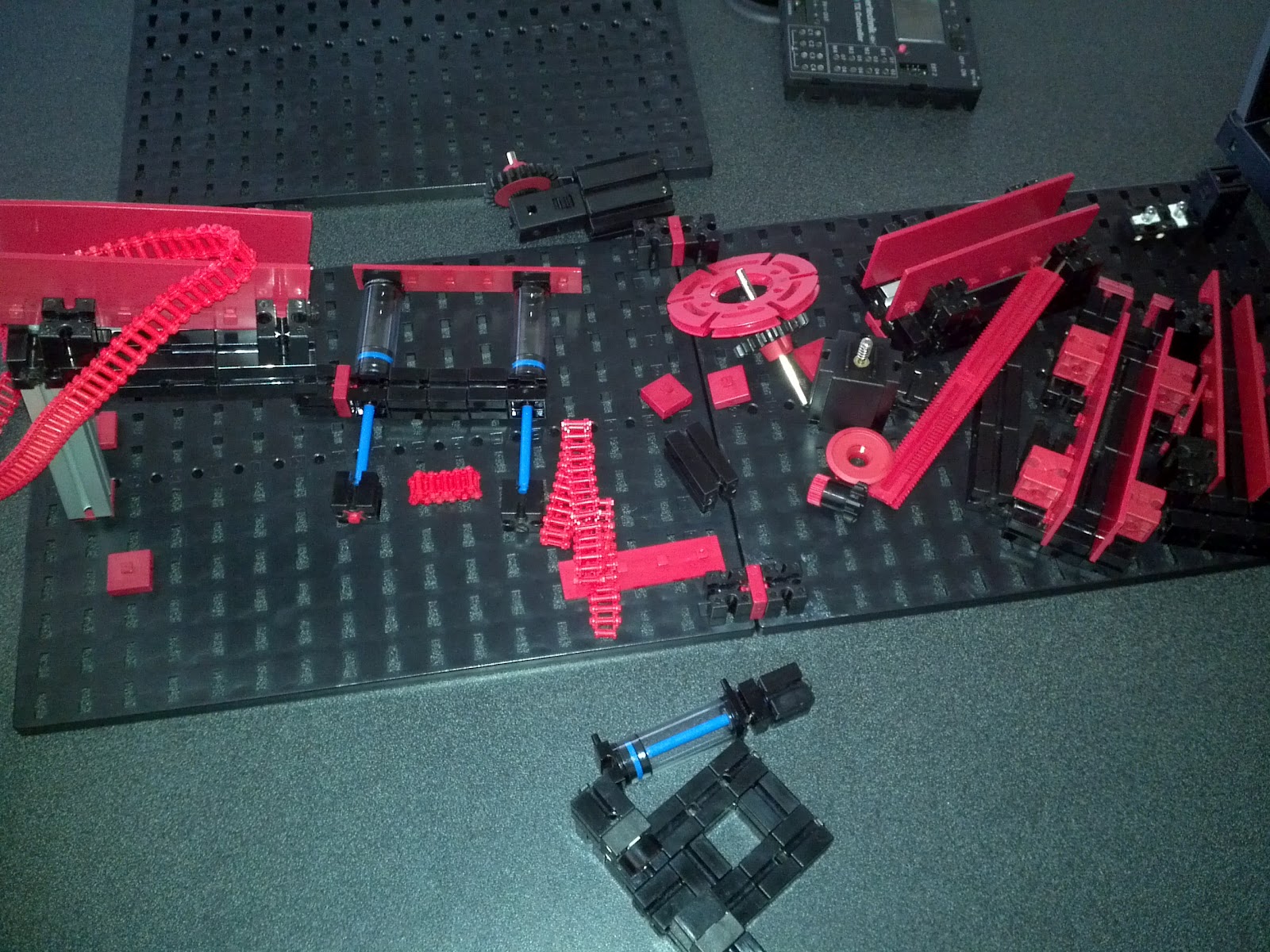
Another idea consisting of three pistons that would retract due to the reading from a photoresistor.


Another View:

Scrap that, we're starting off fresh:


Here's the begining of the end:


It fell apart.....

 Here's our final solution before wiring it up. The wood and metal are seperated in the begining due to size and then ultimately weight. The remaining glass marbles are subjected to a beam of light and a photoresistor that is programmed to read different values that are paired with a certain bin.


Some of the wiring and setting up the compression chamber

 The Final Product:

This project has been my favorite so far. Having such loose guidelines and just an ultimate goal gave us a lot of freedom as to how we were going to approach it. Our team sifted through various ideas during the process and ultimately developed an apparatus that involved both simple machines and electronic components.

Friday, April 20, 2012

Central Air System


Here we have created a simple solution to monitor the temperature and controll it.

Open and Closed Loop Systems


Conclusion
1. Describe an open loop system that has not already been given as an example. Could the system benefit from feedback? Justify your answer.
- When using the reheat function on a microwave, the sensors require input from the temperature of the food to determine whether or not the food is heated to an appropriate temperature or the loop needs to be continued until the desired range is reached.

2. Describe a closed loop system that have not already been given as an example. Describe the feedback utilized, and describe why that type of feedback is utilized.
- An AC system would be triggered by the feedback it gets from the environment. If the temperature is too warm, the system will engage and the AC will turn on while the system loops over and over again, acquiring readings from the thermostats. Once the desired temperature is reached, the system will disengage.

Monday, April 16, 2012

Variable Functions


Conclusion1. Decsribe how you micht modify the Plus command so that it can reset a variable block to 0 within the program.
You would open the properties for the command and change the data input for the value and set the starting value to zero.
2. What might an industrial or manufacturing engineer need to count or keep track of? Describe one example.
They would most likely need to keep track of the amount of products created. For example, if a company is making microchips and they are created on an assembly line, having a machine that counts the amount of times a process is done and compares it to a final counter at the end of assembly would ensure that effeciency was at its maximum

Branch Functions


Conclusion
1. Describe why it is important to include branches in programs.
Branching functions allows one to create more intricate programs and include set requirements and standards that the program must execute before finishing. You can implement switches, counters, or sensors that will expand the possibilities of the programs use.

2. Describe an everyday application of a normally open switch that has not been given as an example.
A doorbell is normally and open switch but by pushing down on it, the switch is closed sending the signal and resulting in the bell.


3. Describe an everyday application of a normally closed switch that has not been given as an example.
A car alarm is an example of a normally closed switch that only activates once the system is opened.

Flow Charts


Conclusion
1. How is flowcharting similar to using a map to plan out a route for a trip?

- It is used to show the necessary steps to take in a process. To compare it to a road trip, one would have to follow the steps (roads/turns) but in case of an obstacle (road closing/accident) they must be able to have a fall back plan or a branch that will ultimately take them to their destination.


2. Describe a process that you perform everyday. Develop a flow chart that illustrates the process.

1. Wake Up
2. Shower
3. Eat breakfast
4. Get dressed
5. Bike to school (7:45)
6. Go to class
7. Lunch (11:55)
8. Bike back to school (12:30)
9. Bike Home
10. Do Homework
11. Go to bed

Wednesday, February 29, 2012

Game Changer

1. The "Moneyball" approach was a science that took statistics and numbers from a players career and plugged them into algorithms. Mainly, they were concerned with on base percentage. During its time is was overlooked, however it proved to be one of the most important factors of the game.

2. OPB = (Hits + Walks + Hit by Pitch) / (At Bats + Walks + Hit by Pitch + Sacrifice Flies)

3. Design is a deliberate blend between art and science formulated to reach a desired intention.

4. Design Process
i. Begining scout scene when they are talking about finding new players and Billy Bean keeps bringing them back to the central point of what the original problem was.
ii. The fact that Billy first started out with acquiring three new players to make up for their lost players OBP, however then switched to completely his original idea to devising a complete makeover of the team.
iii. Through watching film, they skouted potential players for qualities that many times were overlooked. They also used it to adjust playing strategies. 
5. Leadership
- a plan or drawing produced to show the function/workings of something before it is built/made.
i. Vision & Direction
ii. Alignment/Management
iii. Commitment

6. Leadership in Moneyball
i. Billy Bean stepping up as the GM and having more interactions with his players, helping them develop.
ii. Billy Bean ignoring what skouts and critics say during meetings and firmly sticking to his proposed plan.
iii.Bean hiring Peter Brand automatically on his own gut for the best of the A's organization

7. A's Winning Record: 76 - 51

8. Winning Ratio: 1.5 to 1

9 Winning Streak: 20 wins

10. Odds of winning 20 games in a row: .0000356

11. This definitely shows that there was a science involved, because with those odds, there was no way the A's could pull off a 20 game winning streak with luck alone.

12. Billy did sometimes take advantage of the art side of management. It's seen clearly when he trades Giambi due to his outlandish behavior. Stats are very important, but if you have a wild, uncontrollable player, it could potentially hurt the team more than the benefit of his stats.

13. Moneyball was written by Michael Lewis, author of The Big Short, The New New Thing, and The Blind Side. His books all follow the theme of the evolution of a game, process, or something that is used in everyday activity or economics.

Wednesday, February 1, 2012

Basic Programming - ROBO Pro

Here's my ROBO Pro program that turn waits for an input, in the form of a switch in this case. Once the statement is True, the motor turns on for 3 seconds, off for 1 second, on for 4 seconds, and finally turns off as the program ends.


Tuesday, November 8, 2011

The 2nd Annual CHS Cardboard Canoe Challenge

Total Amount of Achievements Earned: 15


Design Achievements:Define the Problem and Brainstorm Solutions
Problem: Construct a craft out of only cardboard and duct tape that will float in the pool consistently and have the ability to support one crew member.
Brainstorm:
-          Catamaran
-          Air Pockets/Baffles
-          Duct Tape Bottom
-          Raft: (on top of rather than inside of)
-          STABILITY ISSUE
o   Catamaran- Baffles on edges
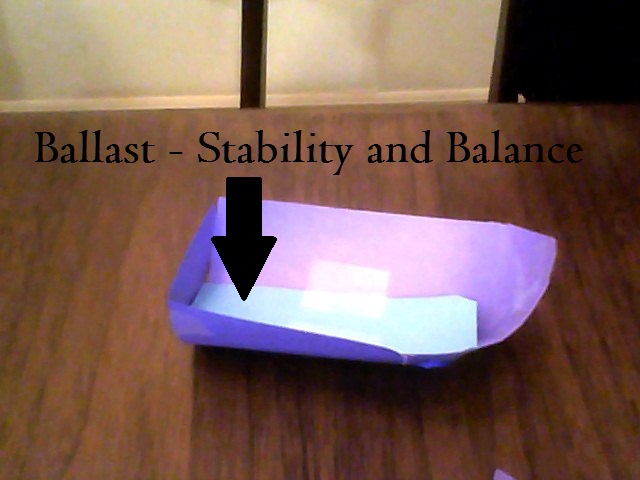
o   Duct tape ballasts
o   Fins
o   Rigid Structure
-          Propulsion
o   Duct Tape sail
o   Paddle
o   Cardboard/duct tape propeller
o   Kicking/swimming
Big Brain - The individual student with the most brainstorms listed will earn a bonus achievement.
Criteria & Constraints - Sketch Ideas 
Prototype Ideas -


Select an Approach - Generate feedback (+, change, ?, !) and make a decision matrix regarding your sketches/prototypes. Specify the approach you've chosen and justify your selection.


Build Achievements:
Build It!

Test Achievements:
The Fastest - Awarded to the first team to reach the far side (25yds)

- Our team absolutely demolished the others in completing 25, 50, 100, and even 200 yards.


The Farthest - Awarded to the team that can travel the furthest (laps)
- Our team completed the most laps as well (8 laps).


The Longest - Awarded to the team with the watercraft that floats the longest (multiple teams may be awarded this achievement if multiple boats remain afloat at the end of our competition period).
- Our boat remained afloat during the whole competition along with another teams.


Balance Master - Awarded if you can have at least one person stand for 5 seconds in the boat (you must conduct this away from the edge of the pool so that non one falls over and hits their head)
- Connor masterfully completed this challenge


Videographer 


Reflection Achievements:
Feedback 
+ - Very Fast
   - Buoyant
   - Somewhat Stable
Change - Simpler design
              - Reinforced walls
? - How much did the side flotation devices help?
   - Was it necessary to cover part of the front top?
! - Double check everything
  - Great building block piece of cardboard

How Low Did You Go? -
- Our Boat went about 3 inches beneath the water, which was surprising. The unit weight of water is 62.43 lb/ft cubed. And Connor, our captain, weighed around 130 lbs.

Redesign 
- If we were to rebuild our boat, I would definitely make sure it is COMPLETELY covered in duct tape to prevent any types of leaks, and might create a more simplistic design similar to a WWII deployment craft.


- Rack Up Those Points! - The group that obtains the most points in the blindfolded, kick-board finding game get this achievement. 

**USS IHopeIFloat obtained 8 points in the blindfolded, kick-board finding game. The most out of our period.

Thursday, November 3, 2011

Amazing

The Future

Imagine working on some of these projects and the effect they could have on everyday life...

Energy Sources!


1. Describe one thing that surprised you about the energy source that you researched and presented.
- I was surprised to see how little wind power we use as a nation. Only 0.26 percent is wind energy. Another thing that was unsettling was their inefficiency. The turbines are only able to generate 30% of their maximum output.

2. Describe one thing that surprised you about an energy source that another team presented.
- With solar power, the fact that there is direct as well as indirect solar power. I never thought of solar power having an effect on water/hydro power in the way that rain is generated from water that has been originally evaporated by the sun.

3. Describe and defend what you believe to be the most important technological need regarding energy.
- I definitely feel as though solar energy is the most important source of energy, however we are not doing all we can to develop it to the fullest. Another thing that is holding us back is the cost. Not to mention the tax that is being implemented by oil companies for not relying heavily on oil.

Wednesday, November 2, 2011

Happy Halloween!!


Why not make a happy pumpkin??

The Deep Dive

1. “From the buildings in which we live and work, to the cars we drive, or the knives and forks with which we eat, everything we use was designed to create some sort of marriage between form and function."


2. The folks at IDEO state that they are not experts in any given area. But, they do claim to be experts on the design process, which they apply to the innovation of consumer products.


3. After the team of designers is brought together, told the problem, and informed they have five days to “pull it off,” what phase of the design process do they immediately engage in?
- They first define the problem they have at hand. So in their case, what is wrong with current shopping carts, such as child safety, security, and efficiency


4. Give two examples of what the team members did during this phase.

a. They visited the makers of current shopping carts and got their opinions on the faults of the product they're mass producing
b. They studied patrons of a local food store interact with their shopping carts and noted what seemed to limit them or cause concern.


5. List five rules-of-thumb that IDEO employees follow when they share ideas during the brainstorming phase:

a. One conversation at a time


b. Stay focused on a topic


c. Encourage wild ideas


d. Differ judgement


e. Build on others ideas


6. Why should wild (and sometimes crazy) ideas be entertained during the brainstorming phase?

Because wild ideas are the backbone of innovations


7. After the brainstorming phase was over, the team narrowed down the hundreds of ideas by voting for those ideas that were not only “cool” but also easy to build in a short period of time. What phase of the design process is this called?


8. IDEO believes that the ideas and efforts of a group will always be more successful than the planning of a lone genius.


9. Once the ideas were narrowed down and divided into categories, the group was split into four smaller teams. What phase(s) of the design process was each of these groups responsible for?

To create a prototype that actively solved the problem/idea that their group was given.

10. The leaders at IDEO believe that good behavior and a fun environment are two important reasons why their employees are able to think quickly and creatively to produce innovative results.


11. Sometimes, people come up with great solutions that work by trying their ideas first, and asking for forgiveness later.


12. Design is often a process of going too far and having to take a few steps back. What phase of the design process would the critique of the four mock-ups come under?

Evaluation and redesign


13. Upon critique of the four teams’ models, it was obvious that none of the teams had developed an optimum solution. However, the people at IDEO believe that it is important to fail often in order to succeed sooner.


14. What percentage of the entire week’s time did it take to fabricate the final prototype

About 40%


15. Instead of showering his design team with a tremendous amount of praise, what did the boss require his employees to do with their new design?

Go show it to employees at a local Whole Foods to get their feedback on it.


16. Of all the things that we are surrounded by every day, what has not been placed through the design process?


Nature


Conclusion

1. What did you find to be the most impressive part of the team’s effort?

What I thought was most impressive was the environment they created. Having a workplace where no single persons ideas are better than another. I hope I'll have an opportunity to work in such a workplace professionally


2. What advantages are there to having a design team with members that have non-engineering backgrounds?

It ensures that you're looking at a problem, solution, idea, or anything in various points of view.


3. There was a point in the process where a self-appointed group of adults stepped up, stopped the ideas, and redirected the group to break up into teams. Why was this done?

To create some type of order. Anarchy is never productive.


4. At the end of the video, Dave Kelly states, “Look around. The only things that are not designed are the things we find in nature.” Can you think of anything that would contradict this statement?

Yes, natural selection and evolution disprove this statement because over generations, organisms adapt and change their molecular or physical design to better survive.

Wednesday, October 26, 2011

iPhone App Tutorials

Now this is all done in Xcode obviously.
Here's the "Hello World!" basic app tutorial:


Up Next is a video for a tutorial on a generic "Papi Jump" game:
*This is a 10 part series. Sequential videos can be found on TheEagle1100's Youtube Channel

Tuesday, October 11, 2011

First C++ Program: Hello, World!

So this is LONG overdue, seeing as how I created this basic program a few weeks back.
But long behold the beginner's milestone of basic programming in all of its glory: Hello, World!
Basic, yes. Easy, yes. But a stepping stone nevertheless.


#include <iostream>

using namespace std;

/*
 *
 */
int main() {
    cout << "Hello World!";
    cout << "I'm a C++ program";
   

    return 0;
}


So I'm currently using NetBeans IDE because Eclipse was acting up for some reason. And what's also nice about NetBeans is that it's capable of creating various Java programs (it's main purpose), however it also can support C++ as well.

Wednesday, September 28, 2011

Emergency Preparedness

Possible Emergency Situations:
  1. Earthquake
  2. Wildfire
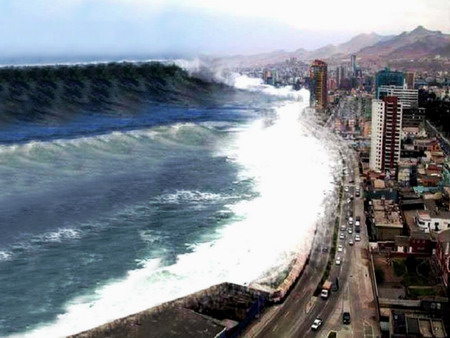
  3. Tsunami
Initial Emergency Preparedness List:
  1. Water
  2. Flashlights
  3. Non-Perishable Food
  4. Fireproof Box
  5. Fire Blanket
  6. Radio
  7. Batteries
  8. First Aid Kit
  9. Extra Clothes
  10. Inflatable raft (Portability Issue)
  11. Life Jacket (Portability Issue)
  12. HAM Radio (Portability Issue, hard to find)
  13. Fire Extinguisher
  14. Tent
  15. Backup Generator (Portability Issue, expensive)
  16. Spare Fuel (Portability Issue, dangerous, and inefficient)
  17. Butane Stove (Portability Issue)
  18. Utensils
  19. Knives
  20. Leatherman

Family Feedback:
(Source: Mom & Dad)
Some items may not be easy to get or safely store for that matter. The backup generator is a good idea, but not always too portable. Extra fuel, or gas, would not be easy to store and probably not the most efficient use of space. The butane stove, inflatable raft and life jackets would present similar problems as well. And HAM radios are expensive and just as hard to relocate.


Final Emergency Preparedness List:
  1. Water
  2. Flashlights
  3. Non-Perishable Food
  4. Fireproof Box
  5. Fire Blanket
  6. Radio
  7. Batteries
  8. First Aid Kit
  9. Extra Clothes
  10. Fire Extinguisher
  11. Tent
  12. Utensils
  13. Knives
  14. Leatherman

Rules of the Road: Mousetrap Racecar Iterative Design

New Challenge Criteria:

                        1. Use only Fischertechnique components


                        2. Must cost under $50

                        
                         3. Weight Limit


Monday, September 26, 2011

Simple Machine Challenge #1: Mousetrap Racecar

Total Number of Achievements: 11
Design:
"Brainiac" - Brainstorm solutions for your design
  1. Treads vs. Wheels
  2. Front Wheel Drive
  3. Back Wheel Drive
  4. All Wheel Drive
  5. Double Leveled (with undercarriage)
  6. Wheel going underneath the back axel
  7. Using wheel and axel (rather than effort on axel) on the front wheels
  8. Effort pulling on axel (without central wheel attatched)
  9. Wheel on back axel to facilitate rotation
  10. Extension off of mousetrap lever
"Visualize It!" - Create a sketch of a design and label key features (Below)


Build:
"Build It" - Build your design.
Initial Design (Failed):


Final Design:

Changes: No central wheel to power front axel. Uniform wheel size. String wrapped around axis rather then wheel.


"The Price of Glory" - If each part you use costs $1, generate a total cost for your build.
                                                                                                            Total Cost: $57

Test (Compete):
"Competitor" - Competed in the 2nd Annual Mousetrap Racecar Challenge.

"Feedback" -  Positive: Good idea with front wheel drive
                        Change: Faster acceleration
                        Question: Would it have accelerated faster without going under the body
                        Exclamation: Interesting idea having two levels

Iterate:
"Re-work" -  Initial Build and Final Build seen above

"Game Changer" - Not being allowed to use rubberbands. The rubberbands created a new dynamic to the challenge that allowed many participants to easily achieve faster acceleration. Restricting the use of rubberbands would create a "back to roots" and "basic" racecar creation feel.

"Name it" - Change "Re-work" possibly to "Innovate" or "Innovations".

Clean Up:
"Leave It Cleaner Than You Found It" - My workspace was neatly broken down into the order the components were initially found at the start of the challenge.

Reflection:
"Design/Build" - The Design/Build process is used on a daily basis in many professions. It was clearly demonstrated in this challenge as well. Each team created their initial design, tested it and then in most cases went back to the drawing board to rebuild, update, or improve their design. This is a valuable skill that is utilized in every company, group, and organization.