Now this is all done in Xcode obviously.
Here's the "Hello World!" basic app tutorial:
Up Next is a video for a tutorial on a generic "Papi Jump" game:
*This is a 10 part series. Sequential videos can be found on TheEagle1100's Youtube Channel
Wednesday, October 26, 2011

Tuesday, October 11, 2011
First C++ Program: Hello, World!
So this is LONG overdue, seeing as how I created this basic program a few weeks back.
But long behold the beginner's milestone of basic programming in all of its glory: Hello, World!
Basic, yes. Easy, yes. But a stepping stone nevertheless.
#include <iostream>
using namespace std;
/*
*
*/
int main() {
cout << "Hello World!";
cout << "I'm a C++ program";
return 0;
}
So I'm currently using NetBeans IDE because Eclipse was acting up for some reason. And what's also nice about NetBeans is that it's capable of creating various Java programs (it's main purpose), however it also can support C++ as well.
But long behold the beginner's milestone of basic programming in all of its glory: Hello, World!
Basic, yes. Easy, yes. But a stepping stone nevertheless.
#include <iostream>
using namespace std;
/*
*
*/
int main() {
cout << "Hello World!";
cout << "I'm a C++ program";
return 0;
}
So I'm currently using NetBeans IDE because Eclipse was acting up for some reason. And what's also nice about NetBeans is that it's capable of creating various Java programs (it's main purpose), however it also can support C++ as well.
Wednesday, September 28, 2011
Emergency Preparedness


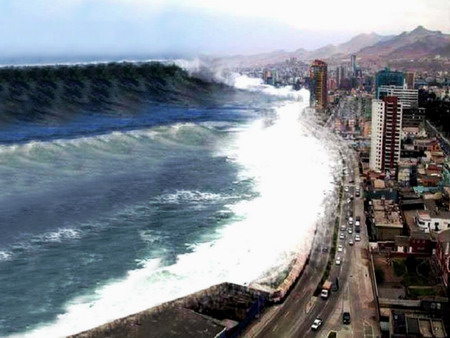
Possible Emergency Situations:
- Earthquake
- Wildfire
- Tsunami
Initial Emergency Preparedness List:
- Water
- Flashlights
- Non-Perishable Food
- Fireproof Box
- Fire Blanket
- Radio
- Batteries
- First Aid Kit
- Extra Clothes
Inflatable raft(Portability Issue)Life Jacket(Portability Issue)HAM Radio(Portability Issue, hard to find)- Fire Extinguisher
- Tent
Backup Generator(Portability Issue, expensive)Spare Fuel(Portability Issue, dangerous, and inefficient)Butane Stove(Portability Issue)- Utensils
- Knives
- Leatherman
Family Feedback:
(Source: Mom & Dad)
Some items may not be easy to get or safely store for that matter. The backup generator is a good idea, but not always too portable. Extra fuel, or gas, would not be easy to store and probably not the most efficient use of space. The butane stove, inflatable raft and life jackets would present similar problems as well. And HAM radios are expensive and just as hard to relocate.
Final Emergency Preparedness List:
- Water
- Flashlights
- Non-Perishable Food
- Fireproof Box
- Fire Blanket
- Radio
- Batteries
- First Aid Kit
- Extra Clothes
- Fire Extinguisher
- Tent
- Utensils
- Knives
- Leatherman
Rules of the Road: Mousetrap Racecar Iterative Design
New Challenge Criteria:
1. Use only Fischertechnique components

2. Must cost under $50
3. Weight Limit

Monday, September 26, 2011
Simple Machine Challenge #1: Mousetrap Racecar
Total Number of Achievements: 11
Design:
"Brainiac" - Brainstorm solutions for your design

Build:
"Build It" - Build your design.
Initial Design (Failed):

Final Design:
Changes: No central wheel to power front axel. Uniform wheel size. String wrapped around axis rather then wheel.

"The Price of Glory" - If each part you use costs $1, generate a total cost for your build.
Total Cost: $57
Test (Compete):
"Competitor" - Competed in the 2nd Annual Mousetrap Racecar Challenge.
"Feedback" - Positive: Good idea with front wheel drive
Change: Faster acceleration
Question: Would it have accelerated faster without going under the body
Exclamation: Interesting idea having two levels
Iterate:
"Re-work" - Initial Build and Final Build seen above
"Game Changer" - Not being allowed to use rubberbands. The rubberbands created a new dynamic to the challenge that allowed many participants to easily achieve faster acceleration. Restricting the use of rubberbands would create a "back to roots" and "basic" racecar creation feel.
"Name it" - Change "Re-work" possibly to "Innovate" or "Innovations".
Clean Up:
"Leave It Cleaner Than You Found It" - My workspace was neatly broken down into the order the components were initially found at the start of the challenge.
Reflection:
"Design/Build" - The Design/Build process is used on a daily basis in many professions. It was clearly demonstrated in this challenge as well. Each team created their initial design, tested it and then in most cases went back to the drawing board to rebuild, update, or improve their design. This is a valuable skill that is utilized in every company, group, and organization.
Design:
"Brainiac" - Brainstorm solutions for your design
- Treads vs. Wheels
- Front Wheel Drive
- Back Wheel Drive
- All Wheel Drive
- Double Leveled (with undercarriage)
- Wheel going underneath the back axel
- Using wheel and axel (rather than effort on axel) on the front wheels
- Effort pulling on axel (without central wheel attatched)
- Wheel on back axel to facilitate rotation
- Extension off of mousetrap lever

Build:
"Build It" - Build your design.
Initial Design (Failed):

Final Design:
Changes: No central wheel to power front axel. Uniform wheel size. String wrapped around axis rather then wheel.

"The Price of Glory" - If each part you use costs $1, generate a total cost for your build.
Total Cost: $57
Test (Compete):
"Competitor" - Competed in the 2nd Annual Mousetrap Racecar Challenge.
"Feedback" - Positive: Good idea with front wheel drive
Change: Faster acceleration
Question: Would it have accelerated faster without going under the body
Exclamation: Interesting idea having two levels
Iterate:
"Re-work" - Initial Build and Final Build seen above
"Game Changer" - Not being allowed to use rubberbands. The rubberbands created a new dynamic to the challenge that allowed many participants to easily achieve faster acceleration. Restricting the use of rubberbands would create a "back to roots" and "basic" racecar creation feel.
"Name it" - Change "Re-work" possibly to "Innovate" or "Innovations".
Clean Up:
"Leave It Cleaner Than You Found It" - My workspace was neatly broken down into the order the components were initially found at the start of the challenge.
Reflection:
"Design/Build" - The Design/Build process is used on a daily basis in many professions. It was clearly demonstrated in this challenge as well. Each team created their initial design, tested it and then in most cases went back to the drawing board to rebuild, update, or improve their design. This is a valuable skill that is utilized in every company, group, and organization.
Wednesday, September 14, 2011
My First Blog Post!
Hello everyone! My name is Drew Findley and welcome to my Engineering Blog. This is my first time ever blogging in general, so I'm sure it will be an interesting experience for all. Plan on posting any types of projects that I've worked on in my Principles of Engineering class as well as other projects I complete on my own as I slowly (probably extremely slow) learn how to program using Java and C++ over the next year.
Above is the homepage for the US Water Polo Program.
So I look forward to using this as much as possible in the Future!
 So as you can see by this image, I play water polo. Its a new sport I just recently picked up this past summer and it's been outrageously difficult and physically demanding. However it's taught me numerous things about commitment, teamwork, mental strength, and time management. So I know the experience will be worth while.
Above is the homepage for the US Water Polo Program.
So I look forward to using this as much as possible in the Future!
Subscribe to:
Posts (Atom)